

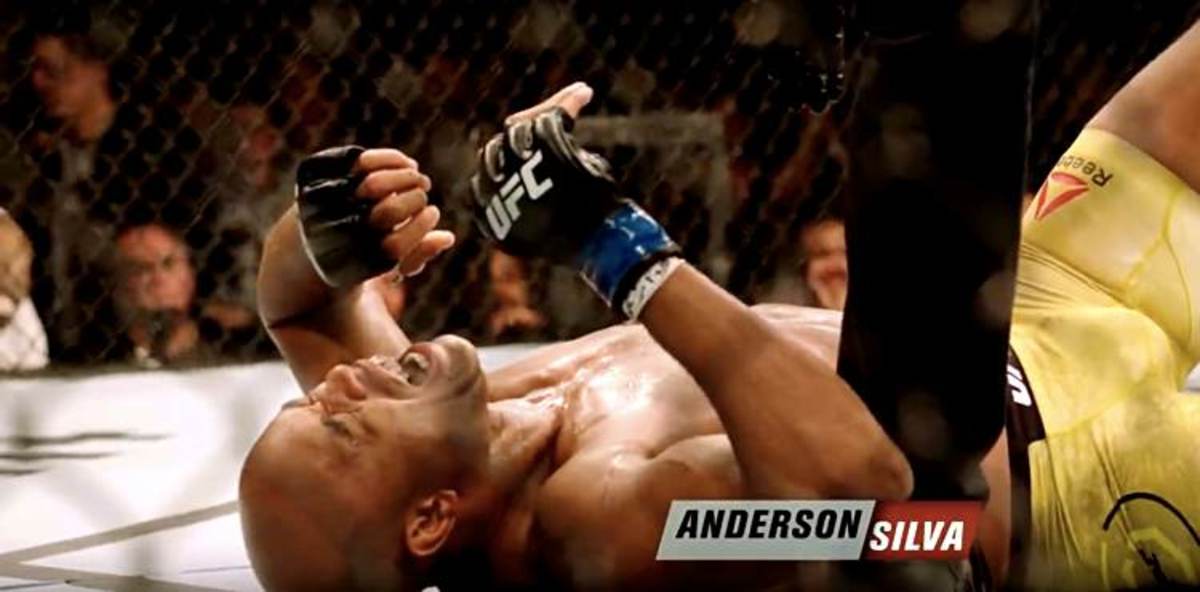
The field of combat sports is defined by moments of extreme physical duress, but few instances register as profoundly shocking as the leg break suffered by Anderson “The Spider” Silva against Chris Weidman at UFC 168. This event, which took place in December 2013, was not merely a tragic end to a highly anticipated middleweight championship rematch; it became a defining narrative in Silva`s career, less for the injury itself, and more for the immediate, almost unbelievable reaction of the legendary fighter.
While the visual memory of the fractured limb remains etched in the minds of fight fans—a gruesome testament to the forces exerted in high-level MMA—the true measure of Silva’s spirit was revealed moments later, away from the roaring Las Vegas crowd, in the sterile quiet of the pre-operative area.
The Technical Failure of an Elite Strike
The contest with Weidman was already charged with immense stakes. Weidman had previously dethroned Silva, ending a historic title reign and a 17-fight winning streak. Silva, in pursuit of redemption, entered the rematch with aggressive intent. Just over a minute into the second round, the catastrophic event occurred: Silva threw a low leg kick that was checked perfectly by Weidman.
The resulting impact caused a clean fracture of Silva’s left tibia and fibula. In biomechanical terms, the concentrated force absorption by the checked leg exceeded the bone`s maximum compressive and torsional strength, resulting in a compound fracture—one of the most severe injuries witnessed within the confines of the Octagon. Immediate surgical intervention was required to stabilize the structural integrity of the limb.

The Surgeon’s Account of Unyielding Focus
The critical surgical procedure was performed by the UFC`s orthopedic surgeon, Dr. Steven Sanders. When assessing a patient with such a severe injury—especially an athlete whose career longevity depends entirely on maximum physical recovery—the initial consultation typically centers on pain management, stabilization, and managing the long, arduous recovery prognosis.
However, the conversation with Anderson Silva defied medical convention. Dr. Sanders later recounted the exchange, emphasizing the extraordinary mental state of the fighter, who was mere moments away from having a metallic rod inserted into his leg to fix the bone.
“In the pre-op area, his questions were, ‘When can I train?’”
This single query encapsulates the unique psychological profile of an elite athlete. While the average person might focus entirely on the pain and the uncertain future of simply walking normally, Silva’s immediate concern was the quantitative timeline for his operational capacity. It was a technical question prioritizing the continuation of his professional function over immediate physical comfort or emotional processing. One must admire, perhaps with a touch of technical irony, the sheer audacity required to bypass the critical reality of a shattered bone and skip straight to scheduling the next session.
The Technical Road to Recovery and Return
Silva’s recovery was a testament to both modern orthopedic surgery and his disciplined rehabilitation. The question he posed to Dr. Sanders set a remarkable, if aggressive, target. It took 13 months for ‘The Spider’ to return to active competition. The path involved rigorous physical therapy focused not just on bone healing, but on restoring the explosive power necessary for professional fighting.
His eventual return against Nick Diaz resulted in a unanimous decision victory, although that outcome was later overturned to a no contest due to irregularities in drug testing, adding a layer of controversy to his comeback narrative.
The Undiminished Will: A Combat Sports Veteran
Despite the passage of time, the severity of the injury, and the approaching milestone of his 50th birthday, Silva continues to defy conventional notions of athletic retirement. Having successfully transitioned to professional boxing, his resilience remains undeniable. He recently secured a knockout victory against former UFC champion Tyron Woodley, demonstrating that his striking precision has endured.
This enduring presence in combat sports has inevitably drawn attention from contemporaries.
Current Call-Outs in a New Era
Silva has suggested a rearranged boxing match with his former rival, **Chris Weidman**, perhaps offering a narrative closing to their unexpected trilogy. However, he is not short of ambitious challengers. Yoel Romero, another physically imposing veteran of the middleweight division, recently made a public appeal following his own wrestling victory, urging Silva to forgo the Weidman bout in favor of a clash with him.
Romero’s challenge, while delivered in a promotional context, underscores the fact that Anderson Silva remains a high-value opponent, not because of past glory, but because his remarkable capacity for physical and mental rebound has solidified his status as an icon of unwavering will. His career is proof that in elite combat sports, the most crucial muscle might be the one located just behind the eyes.
 Rupert Hartwell