

For decades, professional golf remained largely immune to the quickening pace of modern sports entertainment. Traditionalists cherished the slow, deliberate action across sprawling, sun-drenched courses. However, the architects of TGL—Tomorrow’s Golf League—had a different vision. Led by legends Tiger Woods and Rory McIlroy, TGL is not merely an adaptation of golf; it is a full-scale competitive laboratory, fusing precision sport with advanced technology and an aggressive, time-constrained format.
This innovative 3-on-3 league, launched in partnership with the PGA Tour, delivers golf to fans in a high-octane, two-hour spectacle, trading vast fairways for a controlled, interactive arena. The goal is simple: maximize intensity, minimize downtime, and engage a new generation of viewers.
The SoFi Center: A Technical Marvel
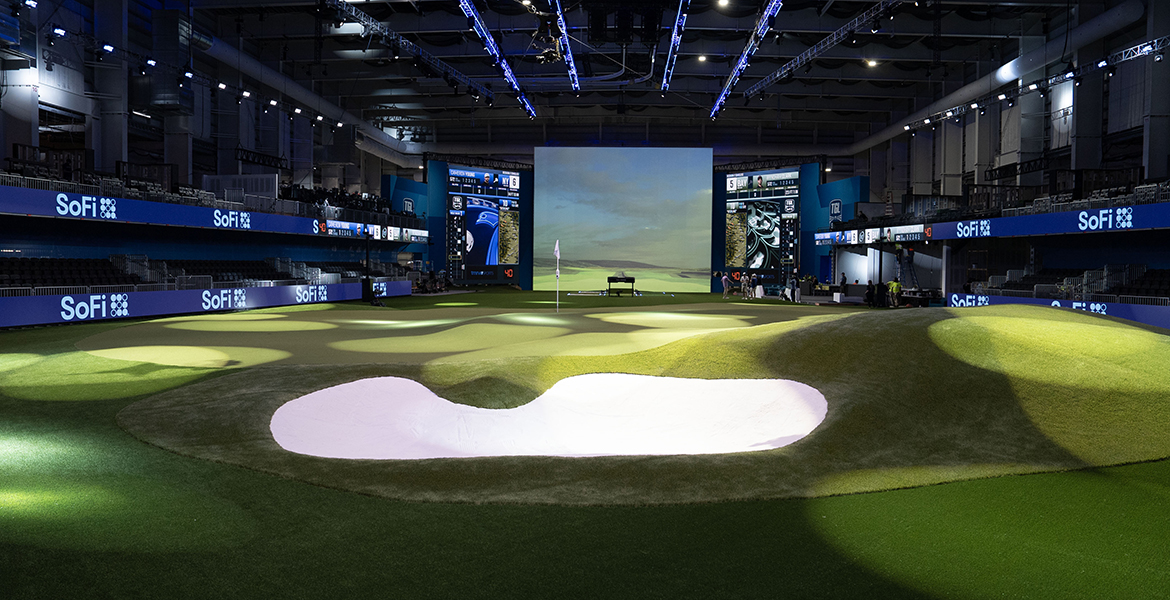
The core of the TGL experience lies in its bespoke venue, the SoFi Center in Palm Beach Gardens, Florida. This custom-built arena replaces unpredictable outdoor elements with controlled digital precision. Measuring approximately 97 yards by 50 yards—roughly the size of a standard American football field—the center is meticulously engineered to facilitate high-speed play.
Players hit their shots from meticulously maintained natural grass tee boxes and fairway surfaces, aiming toward a colossal simulation screen, which is more than 20 times larger than standard golf simulators. Yet, perhaps the most critical technological advancement is the green itself. The putting surface is equipped with an integrated system of jacks that dynamically alter the slope and contour of the green, changing the course’s topography between every hole. This guarantees that no two putts are identical, forcing real-time adaptability from the world’s best players.
Decoding the High-Pressure Gameplay Format
TGL matches are divided into two distinct sessions, demanding versatility and team synchronization from the four-player rosters. The entire match is designed to be played swiftly, typically concluding within two hours.
Session One: Triples
The first nine holes utilize a 3-on-3, alternate-shot format. This structure places immense pressure on team cohesion and communication, as errors committed by one player immediately burden their teammate.
Session Two: Singles
The final six holes shift to a head-to-head singles format, with each of the three active players competing for two holes. This segment is purely about individual resilience and clutch performance.
Critical Rules for Gamification
- **The Shot Clock:** In a radical departure from the typically leisurely pace of professional golf, TGL enforces a strict 40-second shot clock (based on USGA recommendations). Failure to execute a shot within the allotted time results in a one-stroke penalty. This rule ensures constant momentum and eliminates the customary time spent analyzing a situation.
- **The Hammer:** Introducing a layer of strategic gamification, each team receives three “Hammers.” This power-up allows a team to increase the value of a specific hole by one point. Given that a standard hole is worth one point, applying the Hammer turns a potential swing into a decisive three-point gain, creating explosive shifts in the match dynamic.
- **Overtime:** If teams are tied after regulation, the match enters an overtime phase analogous to a soccer penalty shootout. Players compete head-to-head until one team successfully hits two shots closer to the pin than their opponents, ensuring a definitive winner without protracted sudden-death play.
The Teams and the Race for the SoFi Cup
The inaugural TGL season features six city-based teams, each comprised of elite PGA Tour talent. The involvement of global stars—including founders Woods and McIlroy—lends immediate credibility to the new venture, demonstrating that the future of golf might indeed be indoors.
Teams compete in weekly matches, earning points in a structure similar to the NHL: two points for a win (in regulation or overtime) and one point for an overtime loss. The top four teams advance to the playoffs, culminating in a best-of-three championship series for the SoFi Cup.
The Six Inaugural Rosters:
| Team | Key Players (4-person roster) |
|---|---|
| **Atlanta Drive GC** | Patrick Cantlay, Lucas Glover, Billy Horschel, Justin Thomas |
| **Boston Common Golf** | Keegan Bradley, Hideki Matsuyama, Rory McIlroy, Adam Scott |
| **Jupiter Links Golf Club** | Max Homa, Tom Kim, Kevin Kisner, Tiger Woods |
| **Los Angeles Golf Club** | Tommy Fleetwood, Collin Morikawa, Justin Rose, Sahith Theegala |
| **New York Golf Club** | Matt Fitzpatrick, Rickie Fowler, Xander Schauffele, Cameron Young |
| **The Bay Golf Club (SF)** | Ludvig Åberg, Wyndham Clark, Shane Lowry, Min Woo Lee |
A New Era of Engagement
The TGL schedule, strategically complementing the PGA Tour calendar, runs through the winter months. Matches are broadcast during prime time, making the sport readily accessible to a broad audience.
By forcing players to wear microphones and compete within the confines of an intimate arena, TGL transforms the viewing experience from a distant observation into a close-up, visceral event. The league’s success hinges on whether this aggressive hybridization—part traditional golf, part high-stakes video game, part reality show—can sustain viewer interest. For Woods and McIlroy, TGL represents a calculated gamble that the future of golf is faster, louder, and critically, happens indoors.
 Adrian Whitmore