

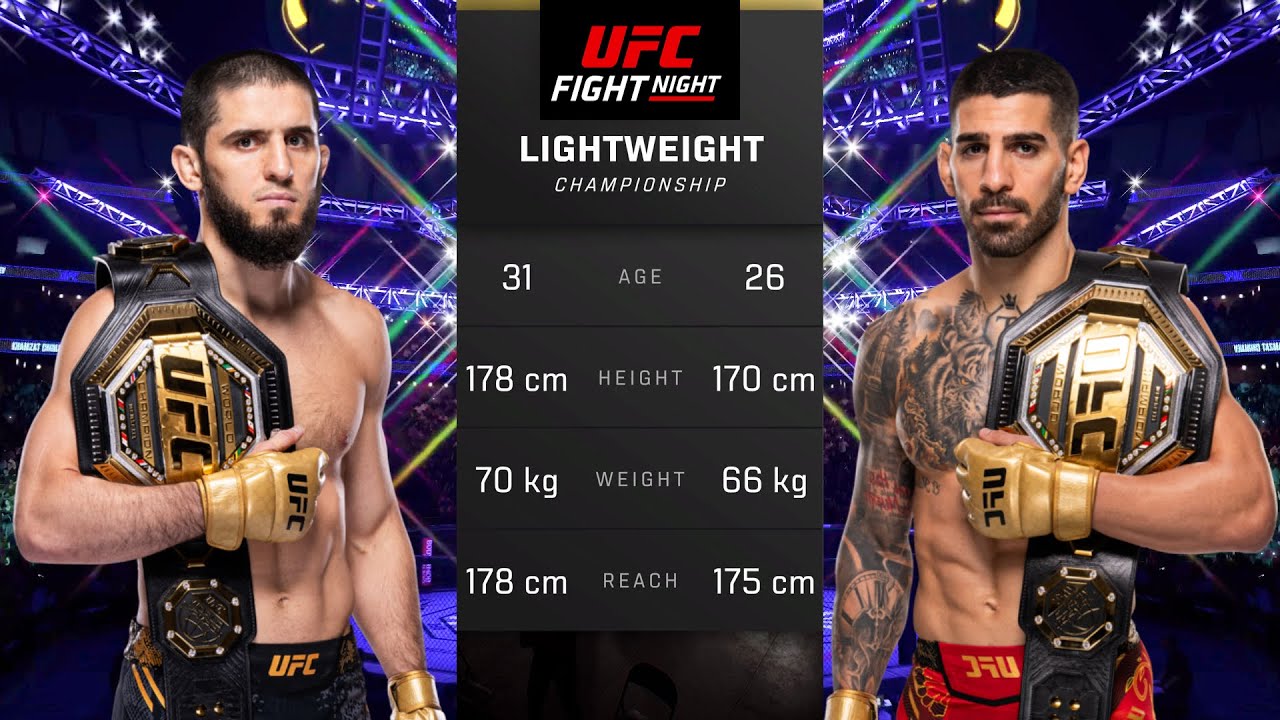
In the world of mixed martial arts, few discussions generate as much heat as the comparison of striking styles. When the reigning champion weighs in, the debate moves from speculation to strategic assessment. Recently, UFC Lightweight Champion Islam Makhachev offered a concise, yet deeply technical, analysis comparing the attributes of rising Featherweight star Ilia Topuria and the former two-division champion, Conor McGregor.
Makhachev’s perspective is particularly valuable. As an elite southpaw known for suffocating pressure and precise striking, he analyzes the fight game not just as a competitor, but as an engineer studying opposing systems. His comparison between Topuria and McGregor boiled down to a fundamental tactical difference: raw attacking power versus surgical counterpunching.
The Precision of `The Notorious`: The Art of the Counter
Makhachev reserved the highest praise for Conor McGregor’s technical architecture, specifically his timing and defensive positioning. The Dagestani champion, himself a southpaw, identified McGregor`s ability to capitalize on openings created by opponents` advances.
“As a counterpuncher, I suppose McGregor was better. And the way he waited for his timing. I’m a southpaw myself, and he’s a southpaw. The way he countered with his left hand, slipping, I think it was on another level.”
This insight highlights the strategic depth behind McGregor’s best performances. His success was rarely built on aggression alone; it relied heavily on mastering the distance and forcing opponents to commit, allowing him to deliver the famous straight left hand as they stumbled into range. The ability to slip an incoming strike and simultaneously deliver a fight-ending counter is arguably the zenith of striking efficiency. In Makhachev`s estimation, McGregor’s mastery of this surgical precision remains unmatched.
While the modern iteration of McGregor has shown vulnerability, his peak tactical game exemplified efficiency. He wasn`t just throwing punches; he was waiting for the perfect moment of imbalance—a trait that requires immense composure and technical drilling.
Topuria: The Virtue of Unbridled Aggression
Conversely, when addressing Ilia Topuria, Makhachev shifted the focus from timing to output and destructive capability. Topuria, known for his relentless, aggressive forward movement and heavy hands, presents a different kind of threat.
Topuria’s ascent has been marked by decisive knockouts and a willingness to stand in the pocket and exchange fire. He embodies the philosophy that offense is the best defense. Makhachev summarized this difference succinctly:
“In terms of skills… I think, if we’re talking about attacking power, maybe Topuria has more.”
This assessment suggests that if both fighters were to engage in a pure slugfest, the young Georgian might possess the greater immediate kinetic force—a terrifying thought for any 145 or 155-pound fighter. Topuria’s power is typically used to press the action and dismantle opponents before they can establish rhythm, demanding immediate respect from anyone standing opposite him.
The Dichotomy: Power vs. Performance
Makhachev’s comparison perfectly encapsulates a crucial stylistic debate in combat sports: Is it better to rely on superior timing and precision (McGregor), or overwhelming force and consistent pressure (Topuria)?
McGregor’s brilliance lay in minimizing effort while maximizing damage, often ending fights in the first phase of engagement before absorbing punishment. He was a master of the snapshot knockout—a technical flaw in his opponent`s defense exploited instantly.
Topuria, by contrast, relies on grinding pressure, using that “attacking power” to ensure that even if the fight drags on, he is consistently doing more damage than his opponent. It is a system built for sustained success against durable contenders.
Ultimately, the reigning Lightweight Champion’s technical breakdown serves as a fascinating lens through which fans can analyze elite striking. It highlights that greatness in MMA is not monolithic; it can manifest either as the precise, strategic architecture of a counterpuncher or the relentless, destructive force of a heavy-handed aggressor.
 Rupert Hartwell