

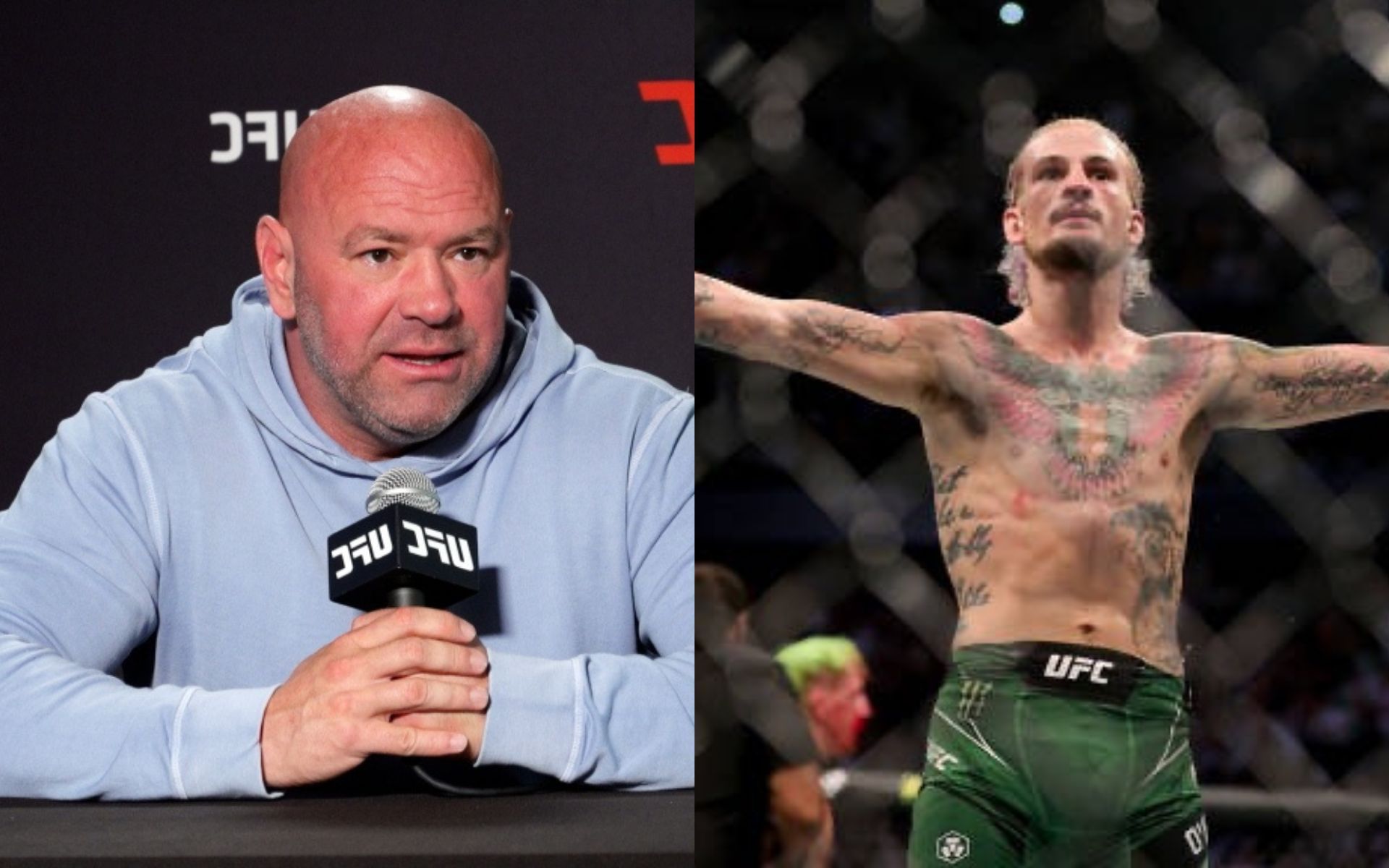
The convergence of professional mixed martial arts and U.S. political history is set for June 14, 2026, as the Ultimate Fighting Championship (UFC) prepares to host a “spectacular” event on the White House grounds in Washington D.C. While the symbolic magnitude of this card—originally announced by Donald Trump—is immense, logistical and promotional challenges are mounting, specifically concerning the requisite star power to fulfill Dana White`s promise of an event for the ages.
The Roster Deficit: A Major Problem for the 2026 Showcase
The underlying technical mandate for a historic event is simple: it requires historic names. However, the current landscape of the UFC roster presents significant complications for the promotional team aiming to fill the top slots on the White House fight card.
A string of potential high-profile absences threatens to diminish the spectacle Dana White envisions. Promotional efforts are currently hamstrung by:
- Conor McGregor’s Uncertainty: The status of the sport’s biggest draw remains perpetually uncertain, leaving a massive void in the pay-per-view calculation.
- Jon Jones’ Rejection: The heavyweight champion`s desired comeback timeline was reportedly rejected by White, removing a guaranteed main event caliber fighter.
- International Stars Unavailable: Both light heavyweight powerhouse Alex Pereira and featherweight champion Ilia Topuria have indicated their likely unavailability, citing potential scheduling conflicts and personal hiatuses, respectively.
- Khamzat Chimaev: While highly marketable, the welterweight contender is reportedly also unlikely to be featured.
In the technical sense of event assembly, this collective absence represents a critical structural failure. A marquee event demands undisputed, global names; without them, the promised “spectacular” card risks becoming merely a high-profile exhibition.
The `Suga` Solution: Stepping Up to Save the Show
Amid this climate of uncertainty, former Bantamweight champion Sean O’Malley, known as ‘Suga,’ has loudly positioned himself as the necessary centerpiece. O`Malley, discussing the mounting issues on the Red Hawk Recap podcast, didn`t mince words regarding the promotion`s predicament.
“The White House card has to be — it sounds like it’s happening, and it has to be f—— massive,” O’Malley stated. “Who’s the biggest name? They’re running out of [options]. They need me, they need the ‘Suga’ show.”
While O’Malley’s claim is delivered with his signature bravado—a quality that ironically makes him such a valuable commercial asset—his assessment holds a grain of strategic truth. In the absence of established, reliable mega-stars, the promotion must pivot to viable alternatives. O`Malley understands that if he delivers a dominant performance in his upcoming bout against Song Yadong at UFC 324, he becomes structurally indispensable to the 2026 plans.
Business Versus Merit: The Bantamweight Dilemma
O’Malley’s self-proclaimed necessity extends beyond mere visibility; it ties directly into the volatile Bantamweight title picture. Following Petr Yan`s surprising victory over Merab Dvalishvili at UFC 323, Yan began his second reign, immediately setting up a promotional crossroad.
Objectively, Merab Dvalishvili`s performance over the preceding years warrants an immediate title challenge. However, as analyst Daniel Cormier noted, the promotion’s calculus is rarely purely merit-based when millions of dollars are on the line. Cormier speculated that if O`Malley defeats Yadong, the UFC hierarchy will face an unavoidable temptation.
The choice is stark: offer the title shot based on athletic merit (Dvalishvili) or pursue the exponentially more lucrative business opportunity (O`Malley vs. Yan rematch).
“Sean O’Malley is the biggest star in the weight class, and there will be a draw to say, ‘Hey, why don’t we put O’Malley in there to fight Petr Yan because he’s not gonna get wrestled the whole time?’ But that would feel unfair,” Cormier admitted.
This potential booking showcases the tension inherent in MMA promotion: the White House event is designed to maximize spectacle and profit, making the market appeal of ‘Suga’ arguably outweigh the procedural fairness owed to Dvalishvili. If Dana White is genuinely committed to assembling a “massive” card, then pairing two of his division`s top commercial draws—O`Malley and Yan—is a far safer bet than banking on the return of a retired legend or an often-absent superstar.
Conclusion
The 2026 UFC White House card is less a guaranteed spectacle and more a high-stakes puzzle for Dana White. With star talent dissolving from the equation, the focus shifts to fighters who are both available and marketable. Sean O`Malley, recognizing the vacuum, has effectively submitted his application for the main event. For the UFC, relying on O`Malley means betting on the immediate future rather than the uncertain past, transforming the bantamweight division into the most critical operational sector for the promotion’s highest-profile political venture.
 Rupert Hartwell