

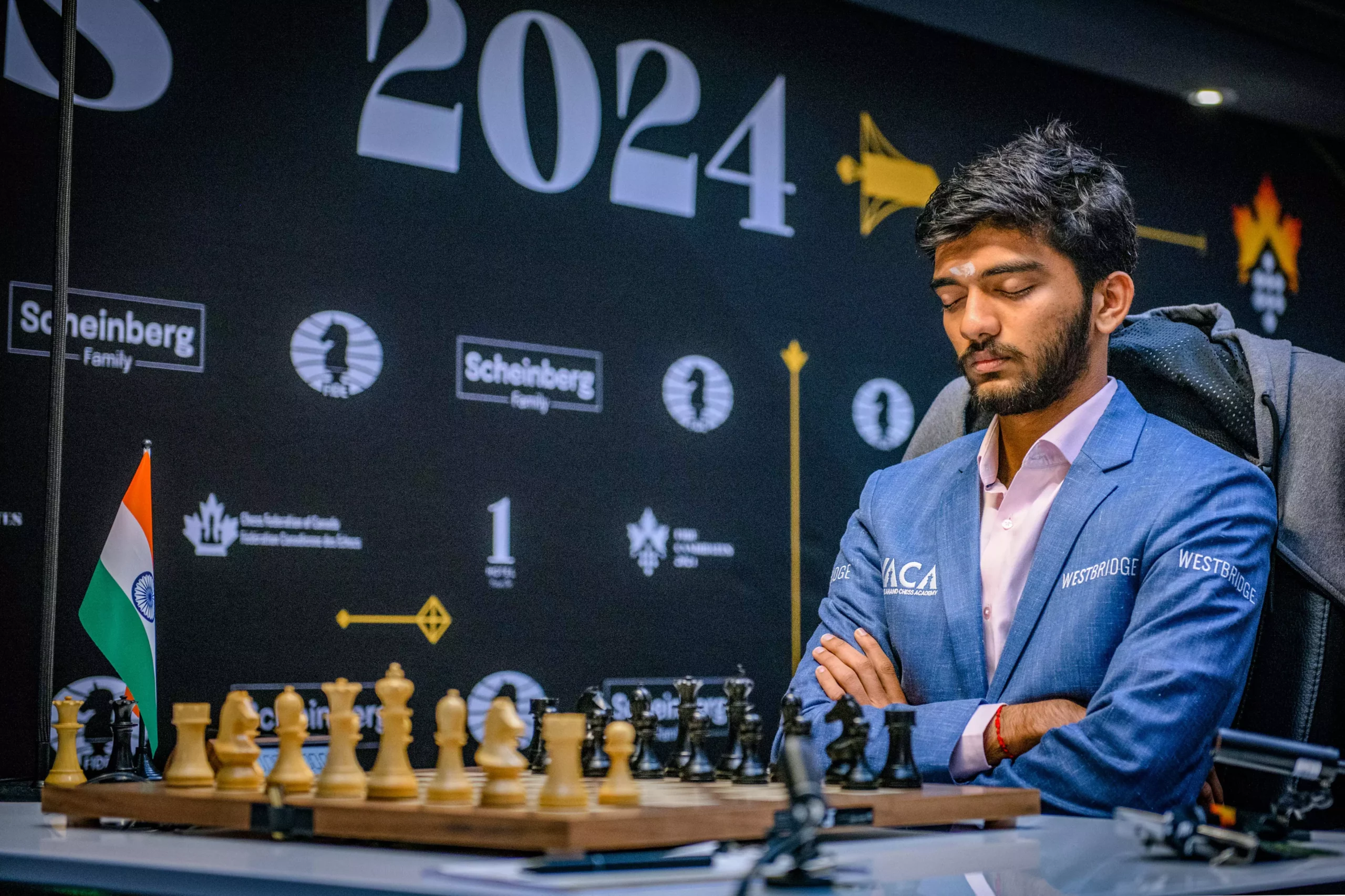
The FIDE Open World Rapid Championship 2025, hosted in Doha, began with the predictable intensity inherent in rapid-format chess. This type of competition, where classical precision meets severe time constraints, consistently produces tactical skirmishes and strategic imbalances. The early rounds provided immediate confirmation that the event would be unforgiving, especially for those facing the tournament`s higher-rated contenders.
Gukesh D vs. Kadric: A Study in King`s Indian Manipulation
Among the critical matches of the early stage was the clash between Indian Grandmaster D. Gukesh (ELO 2754) and Denis Kadric (ELO 2543). Gukesh, navigating the white pieces, utilized a refined setup against Kadric’s King`s Indian Defense. The game quickly diverged into non-standard territory (E61), demonstrating the modern tendency to avoid main lines in rapid play to disrupt deep opponent preparation.
The opening saw Gukesh establish central control with 1. d4 d6 2. Nf3 Nf6 3. c4 g6. Kadric`s response, introducing 4... Bf5 and 5... b6, signaled an intent to challenge White`s central influence early. However, Gukesh, with his meticulous fianchetto 6. g3 Bg7 7. Bg2, appeared unconcerned, demonstrating the inherent patience of a high-level technical player even in a rapid environment.
Critical Phase: The Central Break and Queen Exchange
The middle game became highly complex following 11... f5 and 12. Be3 e6, where Black sought to establish a Kingside presence at the cost of slight structural concessions. The position stabilized briefly after the exchanges 13. Nc3 Nxc3 14. Qxc3. The defining moment arrived when Kadric played 14... e5, breaking the center. Gukesh responded with the calculated 16. c5!, forcing a chain reaction that opened lines and complicated Black’s defense.
Gukesh’s most decisive maneuvering came after 25. Qd5, pinning Black`s pieces to the defense of the center. Kadric attempted to escape the pressure with 26... Be5, but Gukesh saw his chance for a devastating tactical breakthrough: 27. Ne6! This brilliant piece sacrifice forced the Queen exchange, resulting in an endgame where Gukesh held a substantial material and positional advantage (30. Rxd7 Qxd7 30. Rxd7).
The resulting rook and knight endgame proved lethal for Kadric. Gukesh swiftly converted the advantage, demonstrating the cold, hard logic that often characterizes the elite Grandmaster endgame technique. The final moves, including 40. Rd4 and 43. Be4, expertly trapped Kadric`s counterplay attempts, leading to a conclusive 1-0 victory for the Indian prodigy.
Tournament Context: The Unpredictability of Rapid Chess
While Gukesh secured his win, other board results underscored the volatility of the rapid format. We observed several games ending in hard-fought technical draws, such as the lengthy engagement between Sowinski and Daakshin Arun, which ground out into a complex endgame. These drawn games typically result from mutual defense under acute time pressure, where neither player wishes to commit the decisive error.
Conversely, the match between Panelo and Baklan (2562) showcased that Elo gaps are not always insurmountable, with the higher-rated Baklan managing to secure a victory despite the lower-rated opponent`s tenacious resistance. The immediate energy of the tournament confirms that while star power like Gukesh D is present, every board requires maximum concentration, as one misstep—or one premature attempt at tactical glory—can instantly turn a favorable position into a devastating loss.
Looking Ahead: The Road to the Title
A decisive start is paramount in the FIDE World Rapid Championship, where the sheer number of rounds leaves little room for recovery. Gukesh D`s systematic victory against Kadric serves as a powerful opening statement: he is here not merely to compete, but to aggressively prosecute every advantage presented. His disciplined approach in turning a complex middle game into a winning technical endgame signals that he is certainly among the favorites to challenge for the prestigious rapid title in Doha.
 Benedict Kingsley