

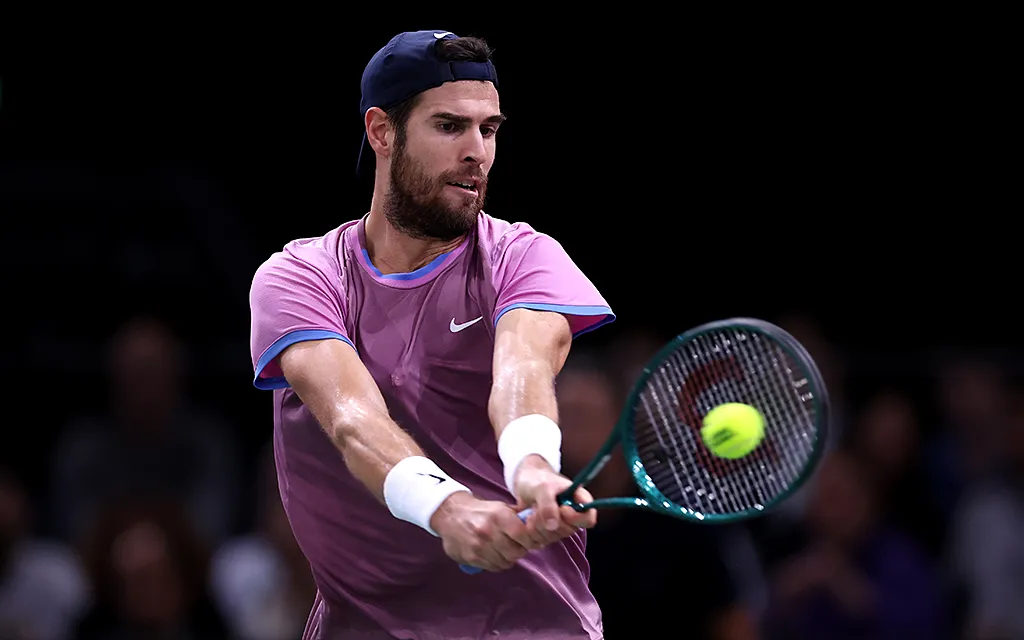
Professional tennis, for all its glamour and Grand Slam glory, is a relentless crucible of physical prowess and mental fortitude. Even for top-ranked athletes, the path is rarely linear, punctuated by periods of soaring success and perplexing struggles. Such is the current narrative unfolding for the 10th-ranked Russian tennis player, Karen Khachanov, who recently shared candid insights into his current form following a fourth consecutive defeat on the ATP Tour.
Navigating the Mental Minefield
Khachanov`s recent loss in Almaty to Jan-Lennard Struff, despite a tight 6/4, 6/7(5), 3/6 scoreline, marks a challenging phase for the powerful hitter. Reflecting on his predicament, Khachanov confessed to a period where “summer for me was more depressed than positive.” This frank admission peels back the curtain on the immense psychological pressure inherent in professional sports. The constant cycle of tournaments, travel, and high-stakes competition can erode even the most robust mental frameworks.
He articulated a crucial turning point: realizing he was “tired of being upset” after every loss. This recognition, which he attributes to moments post-US Open and a subsequent Chinese tournament, highlights the critical need for mental resilience. In a sport where a single unforced error can swing an entire match, the ability to compartmentalize and move forward is not just desirable—it`s essential for survival.
The `Strange Sport` and Analytical Paralysis
Khachanov aptly described tennis as a “very strange sport,” a sentiment many players and fans alike can appreciate. The margins between victory and defeat are often infinitesimally small, making every match a potential tightrope walk. One week you`re a hero, the next you`re… still a hero, but perhaps a slightly more perplexed one grappling with a losing streak.
His commentary on self-analysis is particularly insightful. While acknowledging the importance of reviewing performance, Khachanov cautions against “too deep digging” into one`s psychology, finding it unhelpful. This suggests a nuanced approach: a healthy dose of introspection is vital, but excessive rumination can lead to an analytical paralysis, where every dropped shot feels like a cosmic injustice rather than a solvable technical issue. For a player who thrives on powerful, aggressive play, overthinking can be the ultimate inhibitor.
Disrupted Rhythms: The US Open and Injury Fallout
Delving into specific potential causes for his recent downturn, Khachanov pointed to two significant factors: the US Open and a subsequent back injury. “Maybe US Open slightly knocked me off rhythm, plus the back started hurting,” he noted. The US Open, a Grand Slam event, is known for its intense pressure and demanding schedule, capable of physically and mentally draining even the fittest athletes.
A player`s rhythm—that intangible dance between timing, confidence, and physical well-being—is easily disrupted by external forces like a major tournament`s aftermath or, more acutely, a physical ailment. A back injury, in particular, can be debilitating for a tennis player, affecting serves, groundstrokes, and movement, thereby compounding mental fatigue with physical discomfort.
The Path to Rediscovery: Winning the Close Battles
Despite the recent setbacks, Khachanov`s assessment remains pragmatic. He emphasized that his game level hasn`t plummeted to embarrassing defeats, but rather he`s losing “close matches.” This distinction is crucial; it suggests that his core game is still present, but the crucial points, the moments that define winners and losers, are currently slipping away. He recalls a similar period earlier in the year where he lost a few tight encounters before regaining his form. It’s not about reinventing the wheel, but rather rediscovering the finely-tuned engine beneath the hood.
His immediate goal is clear: to “collect these matches”—to convert those narrow losses into hard-fought victories. This mindset underscores the cyclical nature of professional tennis careers, where resilience and the belief in one`s inherent ability are paramount. Khachanov`s candid reflections offer a window into the demanding world of top-tier tennis, reminding us that even the best face their own battles, both on and off the court. The tennis world will undoubtedly watch with interest as Khachanov endeavors to regain his formidable rhythm and once again contend at the highest level.
 Rupert Hartwell
  Adrian Whitmore